
How to Plan a Room Refresh That Comes Together
From the first idea to the final paint choice, a clear plan helps the room feel connected and the project feel manageable.

A room refresh often starts with one thing. A rug you love. A wall color you have been thinking about. The wish for a living room that feels a little more inviting at the end of the day.
Then the decisions begin to overlap. Will that color work with the sofa? Should the trim change too? When should the painting happen?
A clear plan gives each choice somewhere to belong.
In How to Design a Room from Start to Finish, Caroline Winkler walks through a collaborative room design. She starts with practical needs and visual references, measures the space, and works between layout, budget, and the proposed design. She also shows how a small, unexpected accent can make a coordinated room feel more personal.
For a painting project, the useful lesson is to consider the room as a whole before finalizing its individual surfaces. Here is a manageable way to begin.
Decide what the room needs to do
Write down what you want to improve in ordinary, everyday terms. Somewhere comfortable to read. A dining area that feels welcoming after dark. A home office that works well on a busy morning.
Separate what is essential from what would simply be lovely. That gives you a way to make decisions when the budget or available space calls for a compromise.
Be specific about what paint can contribute. If the room feels visually unsettled because every adjoining wall is a different color, a more connected palette is worth exploring. If the real difficulty is furniture placement, work through that alongside the color plan.
Make a record of what stays
Take a few photographs and list the finishes and furnishings you intend to keep. Include floors, tile, window treatments, doors, and woodwork, as well as the larger furniture.
For the painting scope, note walls, ceilings, trim, doors, closets, and built-ins separately. “Paint the bedroom” can mean very different things depending on which of those surfaces are included.
Mark areas you want a painter to inspect, such as damaged trim or a visible wall repair. You do not need to diagnose the cause yourself. The point is to bring those details into the conversation before the estimate is finalized.
Settle the layout before choosing the feature wall
Measure the room and the furniture you plan to use. Include doors and windows, and check how the room feels as you move through it. A drawing on paper is enough to begin.
For paint, the layout helps answer a quieter question: where will you actually see the color? A wall mostly covered by a tall cabinet has a different role from the wall behind a small reading chair.
Consider the view through the doorway and from your usual seat. Decide whether you want the walls to form a continuous backdrop or whether one architectural element deserves more attention.
Build the palette around the materials
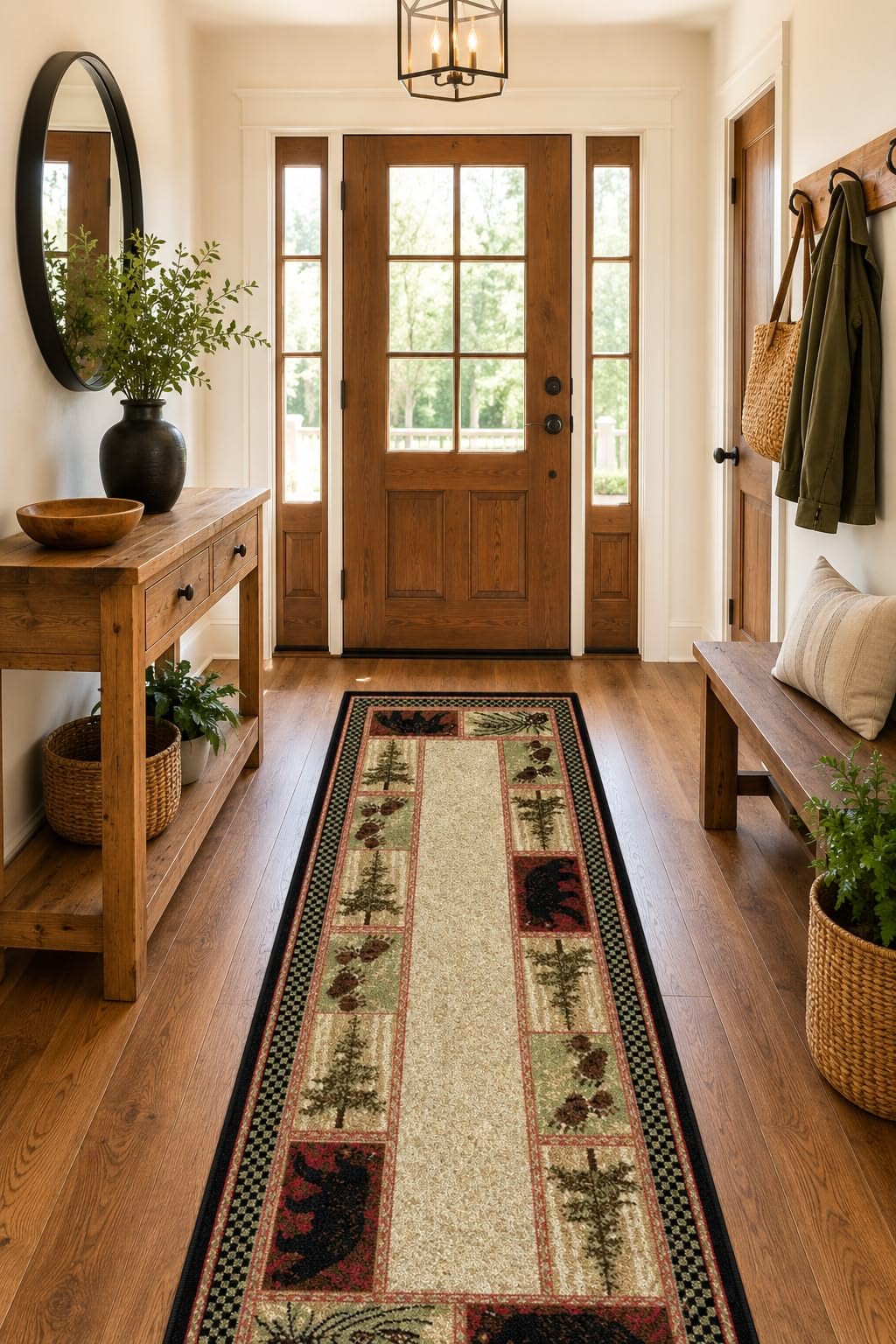
Wood finishes and a patterned rug give you a starting point for choosing the surrounding wall and trim colors.
Gather the important samples together: flooring, upholstery, curtain fabric, and any new tile or wallpaper. Then compare a short list of wall and trim colors alongside them.
Suppose you are keeping an oatmeal sofa and a warm wood floor, and adding a patterned rug. Try the paint with a physical rug sample or the rug itself. You might prefer a wall color that quietly connects those materials, leaving the pattern to provide the detail.
Check your samples in daylight and with your usual lamps on. Sherwin-Williams explains that lighting and finish affect a paint color’s appearance in its light and finish guide. A screen mockup can help you compare ideas, but make the final color decision in the room.
Give the painting scope its own budget
Before spending the entire room budget on furnishings, find out what the proposed painting includes. Ask for clarity on surface preparation, repairs, coatings, protection, and cleanup.
Trim and doors deserve their own discussion. A small amount of visible surface does not necessarily mean a small amount of preparation or detailed work. If you are considering a contrasting trim color, include it in the initial scope so you can assess the whole project.
Choose the product and finish for each surface as well as its color. Sheen affects reflection and the visibility of surface imperfections; Sherwin-Williams’ paint finish guide explains the differences. Check the specific coating’s intended use and care guidance before settling on it.
Agree on the sequence, then leave room to settle in
If the refresh includes flooring, electrical work, or new millwork, talk through the order with the people doing the work. Agree on when surfaces will be ready to paint, how finished work will be protected, and who will handle any final touch-ups.
Keep a simple record of approved colors, products, and sheens by surface. Share changes before work begins so everyone is working from the same plan.
Once the main work is finished, give yourself time with the room. Move the lamp. Try the artwork from your usual seat. You may find that the painted backdrop already gives the things you own a new place to belong.
Frequently asked questions
Should I choose paint before furniture?
Start with the furnishings and finishes that are staying, then consider any important new pieces. You can explore paint early, but confirm the final color alongside the actual materials before painting.
Do I need a professional room rendering?
No. A simple floor plan and a small collection of images or material samples can help you make decisions. A digital mockup can show relationships, but it does not replace physical paint samples in your room.
Should I paint before installing new flooring?
Coordinate the sequence with both contractors. Flooring work can affect baseboards and nearby walls, while painting requires protection for finished surfaces. Agree on installation, trim work, painting, and any final touch-ups before work begins.
How do I make a painting estimate easier to compare?
Give each painter the same list of rooms and surfaces. Ask what preparation, repairs, products, protection, and cleanup are included. Confirm how additional repairs or changes will be priced.
Can a small painted detail change the room?
It can. A door, trim, or built-in can add a touch of color to the room. Test the color with the surrounding finishes and have the coating selected for that surface and its use.
A home that feels like yours
A few good decisions can make the next step feel clear. Bring your ideas, the finishes you’re keeping, and the room you want to enjoy more. We’d be glad to help plan the painting.