
How to Paint Stucco: Preparation, Paint, and Finish
A practical guide to painting stucco, from choosing a color that suits your home to careful preparation and an even finish.

Stucco gives a home character. Soft texture in the morning light. Depth around a window. A backdrop for stone, wood, and the landscape around it.
A new color can bring those details together. A warm white beside weathered brick. A muted green that feels at home among the trees. A softer neutral that lets the front door have a little more presence.
Painting stucco starts with understanding the surface. From there, the work is straightforward: prepare it carefully, choose a compatible coating, and apply it evenly through the texture. Here’s what to consider before you begin.
Start with the surface
Before choosing paint, find out what’s on your home.
Traditional cement stucco and EIFS, often called synthetic stucco, can look similar. Their repair and coating requirements can differ. Existing paint or clear sealers also affect preparation and product selection. If you’re unsure what you have, get the wall system identified before starting. Benjamin Moore’s stucco guide, Sherwin-Williams’ surface evaluation guidance
Look closely at the condition, too. Cracks, loose areas, and signs of moisture deserve attention before painting. Significant or recurring damage calls for an assessment of the cause and the appropriate repair. A fresh finish belongs over a sound wall. Dryvit’s maintenance and repair guidance
Choose color with the house
Start with the materials that are staying. Your roof, stone, brick, and window frames already contribute color to the exterior.
Look for shades that sit comfortably beside them. A creamy white might bring warmth to pale stone. A subdued brown might connect the stucco to a timber entry. You don’t need a dramatic change to bring the exterior together.
Take your shortlist outside. Hold large sample boards beside the fixed materials and look at them in sun and shade, at different times of day. Follow the sample product’s instructions: some sample paints are intended for boards and interior use, so they shouldn’t go directly onto exterior walls. Benjamin Moore’s exterior color guidance
Step back to the street as well. Give yourself a chance to see the whole house.
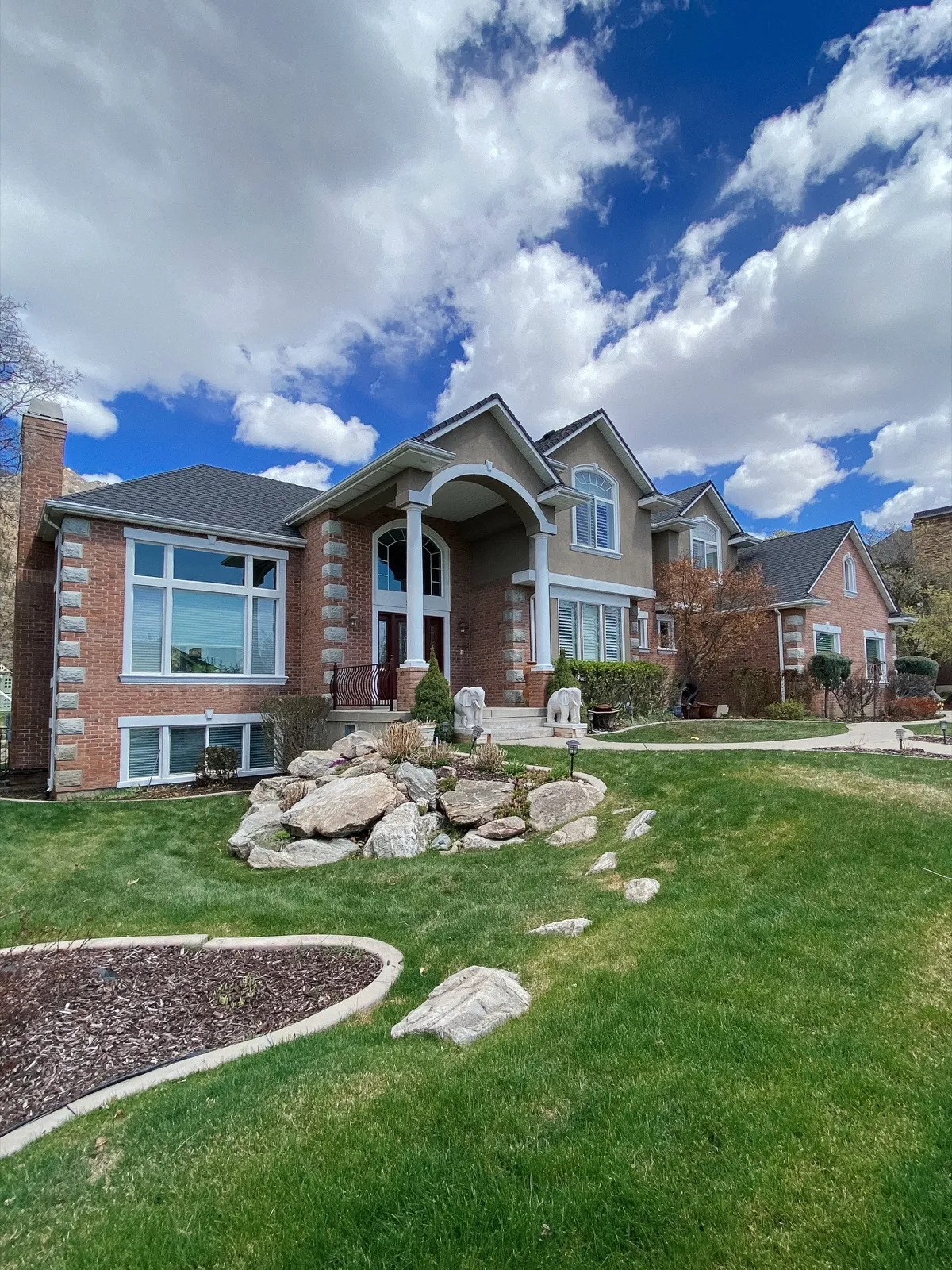
Consider the stucco color alongside the brick, roof, and trim already on your home.
Clean with care
Dirt, chalky residue, mildew, and loose material need to be addressed before coating. The surface should be thoroughly rinsed and allowed to dry. Sherwin-Williams’ preparation guidance
The cleaning method should suit the wall system and its condition. There is no single pressure-washer setting that belongs on every stucco exterior. Dryvit’s guidance, for example, calls for controlled cleaning and warns that excessive pressure can damage its finishes. Test the chosen method in an inconspicuous area first. Dryvit’s cleaning and repair procedures
If you notice white, powdery deposits, have them identified. They may be efflorescence: salts carried to the surface by moisture. Address the moisture source and remove the deposits before coating. If they continue to return, delay painting. Sherwin-Williams’ efflorescence guidance
Give repairs their time
Small surface cracks and larger damaged areas need different treatment. Use repair materials approved for the wall system, and follow their preparation and curing instructions.
On textured walls, the appearance of the repair matters, too. Take time to match the surrounding finish. A smooth patch can remain noticeable after the color is applied. Benjamin Moore’s stucco repair guidance
For EIFS, repairs may involve the reinforcing mesh and underlying layers. The cause of cracking should be established before work begins. Dryvit’s repair procedures
New cement-based stucco and fresh repairs also need sufficient curing time. Follow the stucco supplier’s requirements and the selected coating’s limits for moisture and alkalinity. A calendar alone doesn’t establish whether the surface is ready. Sherwin-Williams’ curing and alkalinity guidance
Choose the coating to fit
There are suitable exterior acrylic paints for stucco. Benjamin Moore, for example, recommends an exterior acrylic paint within its stucco painting system. A specialty masonry coating may suit other conditions. The right choice depends on the surface and the complete preparation, primer, and finish system. Benjamin Moore’s exterior painting guidance
Primer requirements vary as well. Some systems call for a separate primer or conditioner. Others allow direct application under specified conditions. Follow the instructions for the exact product being used. Sherwin-Williams’ Loxon XP technical data
For EIFS, choose a coating approved for that system. Dryvit recommends compatible, breathable acrylic coatings and advises against oil-based paint. Dryvit’s recoating guidance
The product decision should follow the house in front of you.
Work through the texture
Stucco needs even coverage across both the raised texture and the recessed areas.
A roller can work well when its nap suits the texture and coating. Spraying followed by back-rolling is another approach. Back-rolling means working a roller over the freshly sprayed coating to distribute it through the surface. Benjamin Moore recommends back-rolling or back-brushing after spraying stucco. Benjamin Moore’s application guidance
Follow the product’s specified coverage, film thickness, coat count, and drying intervals. A surface that looks covered may still need more material to meet the coating requirements. Sherwin-Williams specifically calls for spraying and back-rolling Loxon XP on porous, rough stucco. Loxon XP technical data
Care shows in these details. Even color through the texture. Neat edges beside the trim. Attention to the places you see every time you come home.
Leave room for the weather
Plan the work around the coating’s application and drying requirements.
Check air and surface temperatures, overnight lows, and the chance of rain or condensation. The wall temperature can differ from the forecast, and drying time changes with conditions. Use the selected product’s instructions to set the working window. Sherwin-Williams’ application guidance
A good schedule leaves the finish the time it needs.
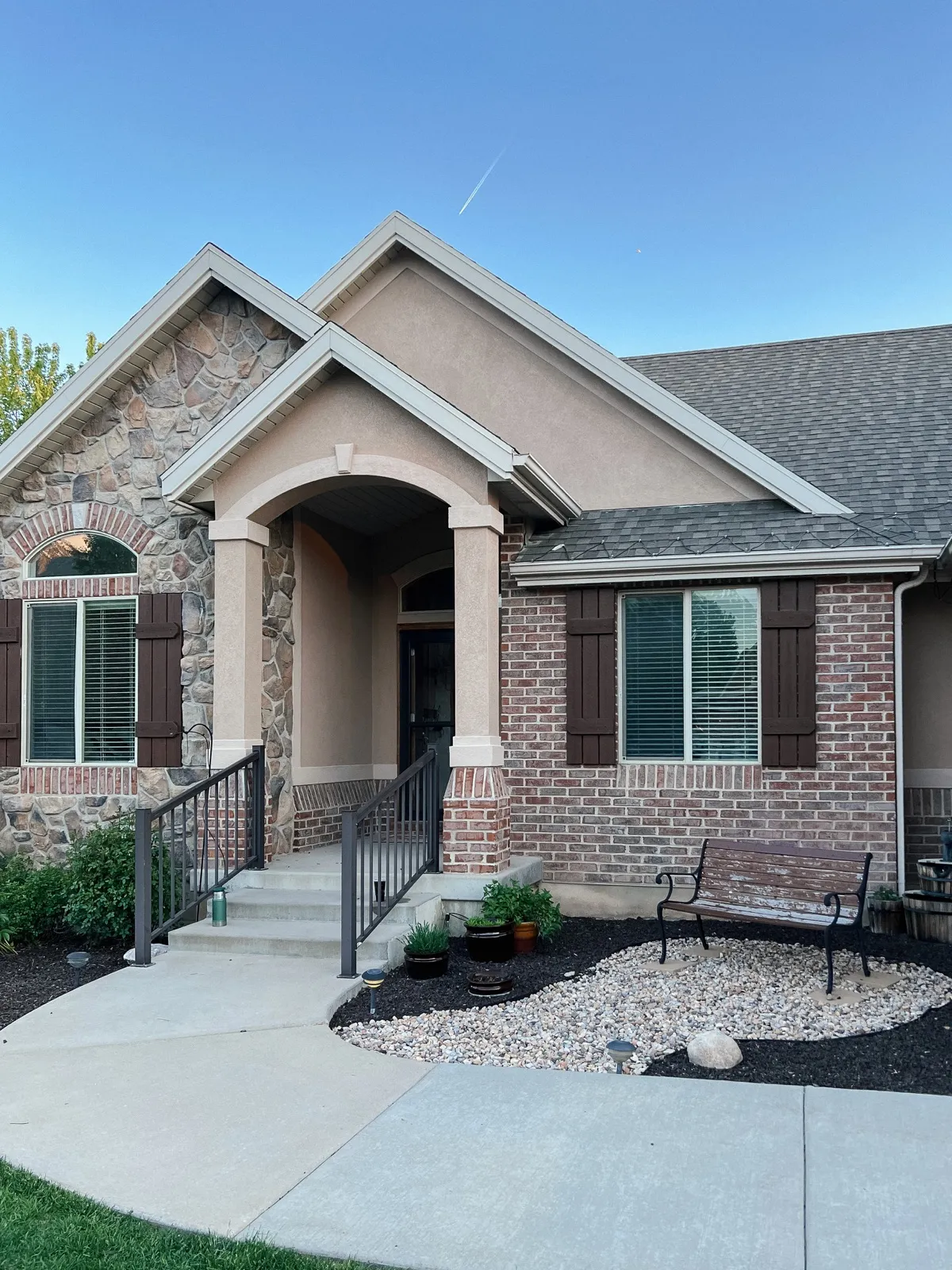
A finished entry brings stucco, stone, brick, and trim together.
Frequently asked questions
Can you paint stucco that has already been painted?
Yes, if the existing coating is sound and compatible with the new paint. Start by checking for peeling, chalky residue, cracks, and moisture issues. Clean the surface, address repairs, and let it dry before applying the recommended coating system. Primer may be needed depending on the surface and product. A fresh color starts with a surface that’s ready for it.
What kind of paint is best for stucco?
We prefer Sherwin-Williams Loxon XP. In our experience, it’s the best choice for the stucco homes we paint. We still check the surface and existing finish first to make sure it’s the right fit for your home.
Does stucco need primer before painting?
Usually, no. With Loxon XP, a separate primer generally isn’t needed on properly prepared, compatible stucco. Some surfaces may need a conditioner or additional preparation, so we assess the walls before deciding. Cleaning and repairs still matter, even when primer isn’t required.
Is it better to spray or roll stucco?
Both can work. A roller needs the right nap to reach into the texture. When spraying, back-rolling or back-brushing helps distribute the fresh paint evenly. The goal is consistent coverage across the whole surface.
How do I choose a stucco color that suits my home?
Start with the roof, stone, brick, and window frames that are staying. Compare large sample boards beside those materials, then look again as the light changes. Give yourself time to find a shade that feels right with the whole house.
A home that feels like yours
The best place to start is with your own exterior. The materials you love. The color you’ve been reconsidering. The details that could use a little attention.
At U.S. Painting, we bring careful preparation and attention to detail to homes across Northern Utah. We’d love to hear what you have in mind.